AI Economics
Why AI Changes SaaS Unit Economics
AI features can grow in adoption while their economics deteriorate. Here is the structural tension.
Read article →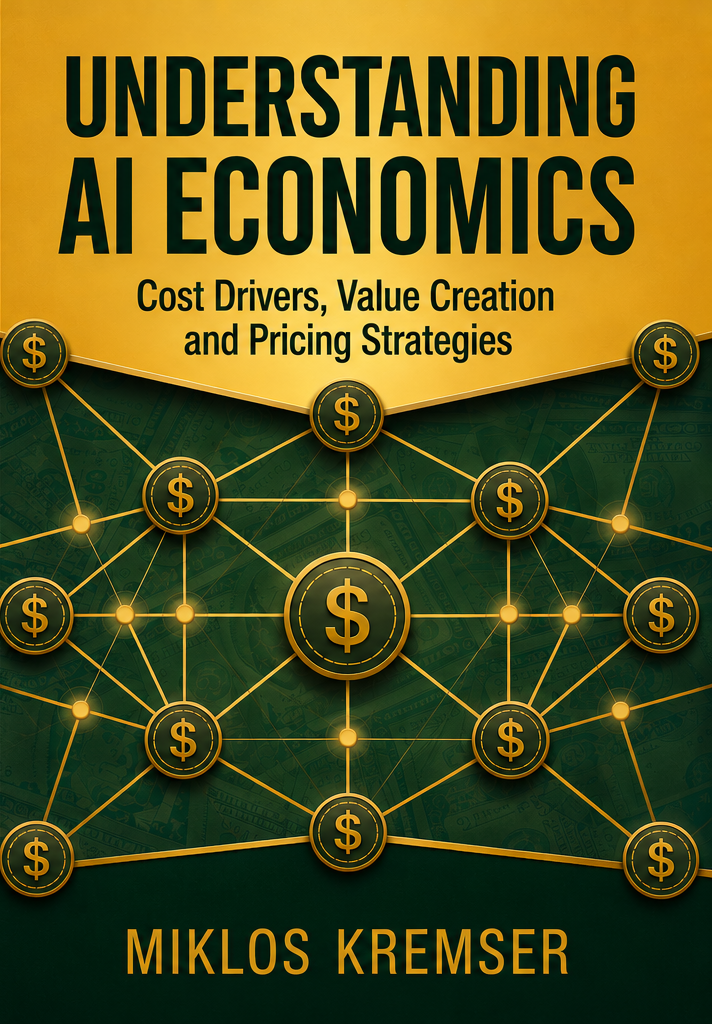
Every software company is racing toward AI. Far fewer have stopped to ask whether the economics actually work. Traditional SaaS relied on near-zero marginal costs; AI introduces a real cost for every prompt, generated token and agent step. Yet the cost of intelligence is also falling dramatically. Understanding AI Economics shows how to navigate that contradiction—and turn capability into sustainable economic value.
Lessons across industries
Connecting cost, value and price
Built on hands-on experience
Explore how model choice, token consumption and agent workflows influence the cost of AI-powered products.
Use the downloadable Excel estimator to examine the economics of AI workloads and build a more informed cost model for your business.
Spreadsheet download requests: —
 Watch the AI Cost Estimator walkthrough →
See how to use the estimator, then download the Excel workbook.
Original perspectives on the economics, architecture and pricing of intelligent products.
AI features can grow in adoption while their economics deteriorate. Here is the structural tension.
Read article →The pricing problem that emerges when AI automates work rather than simply supporting more users.
Read article →Why autonomous agent workflows require a different approach to measurement and cost control.
Read article →VP of Pricing and Principal AI Product Manager at Vyne Dental, with 23 years of experience in pricing strategy, customer analytics and financial modeling across major industries.